
Nursing homes and small hospitals (10–30 beds)
One doctor-owner, a front desk, a ward, a small pharmacy, and a billing counter that is also the pharmacy. You need the whole system, not a quarter of it — at a price that makes sense for twenty beds.
Five bad days, and what the system does about each
Every one of these happened in a real hospital. Each links to the story and to the screen it produced.
The appointment that never becomes a visit
Booked by phone, forgotten by both sides, the slot wasted and the patient somewhere else.
The estimate at admission and the bill at the end
Small hospitals live or die on the family's trust at the counter.
The stock-out and the prescription sent outside
Twenty beds cannot carry a big store; the system has to see the stock-out before the ward does.
The discharge medicine they could not afford
The prescription written for the brand; the generic in the cupboard.
The night round
One duty doctor, one nurse, and the record of what happened between midnight and six.
Your first week
The go-live plan sized for this kind of hospital — the full six-step version is on the pricing page.
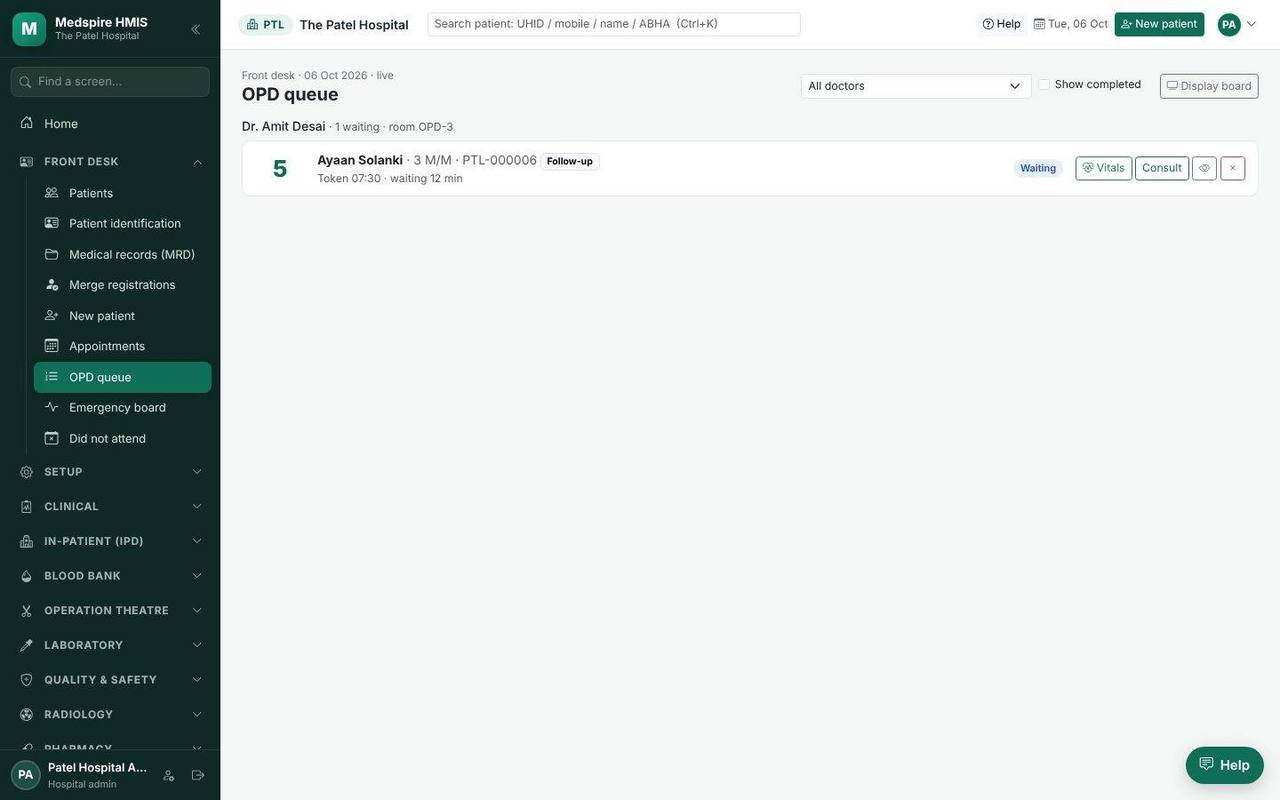
- Day 1Hospital profile, doctors, tariff, two wards — an afternoon
- Day 2Front desk and OPD live; ABHA at registration
- Day 3–4Pharmacy stock loaded from the last purchase bills
- Day 5IPD and billing in parallel with the register
- WeekendThe register closes
The modules you will live in
Front desk
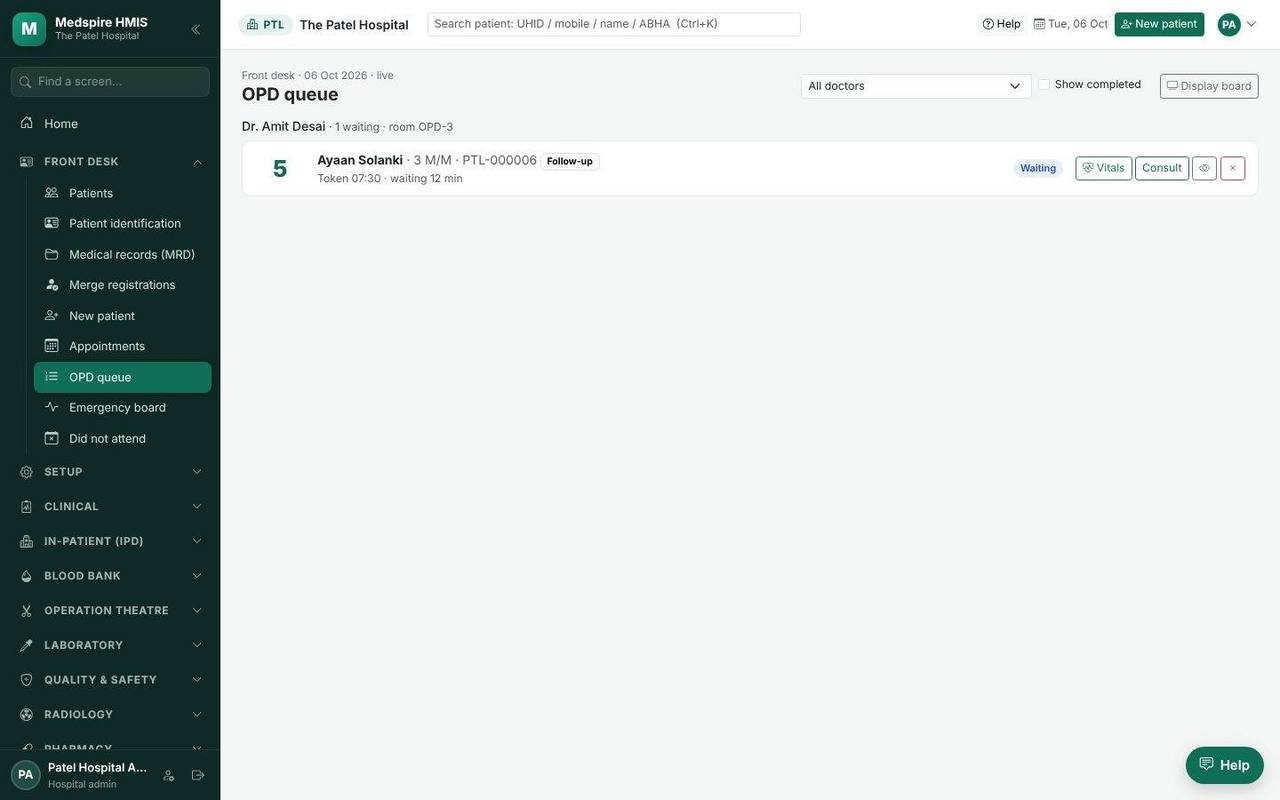
Registration with ABHA, appointments, the OPD queue, emergency board, wristbands, medical records, merges and the patient's own portal.
Clinical
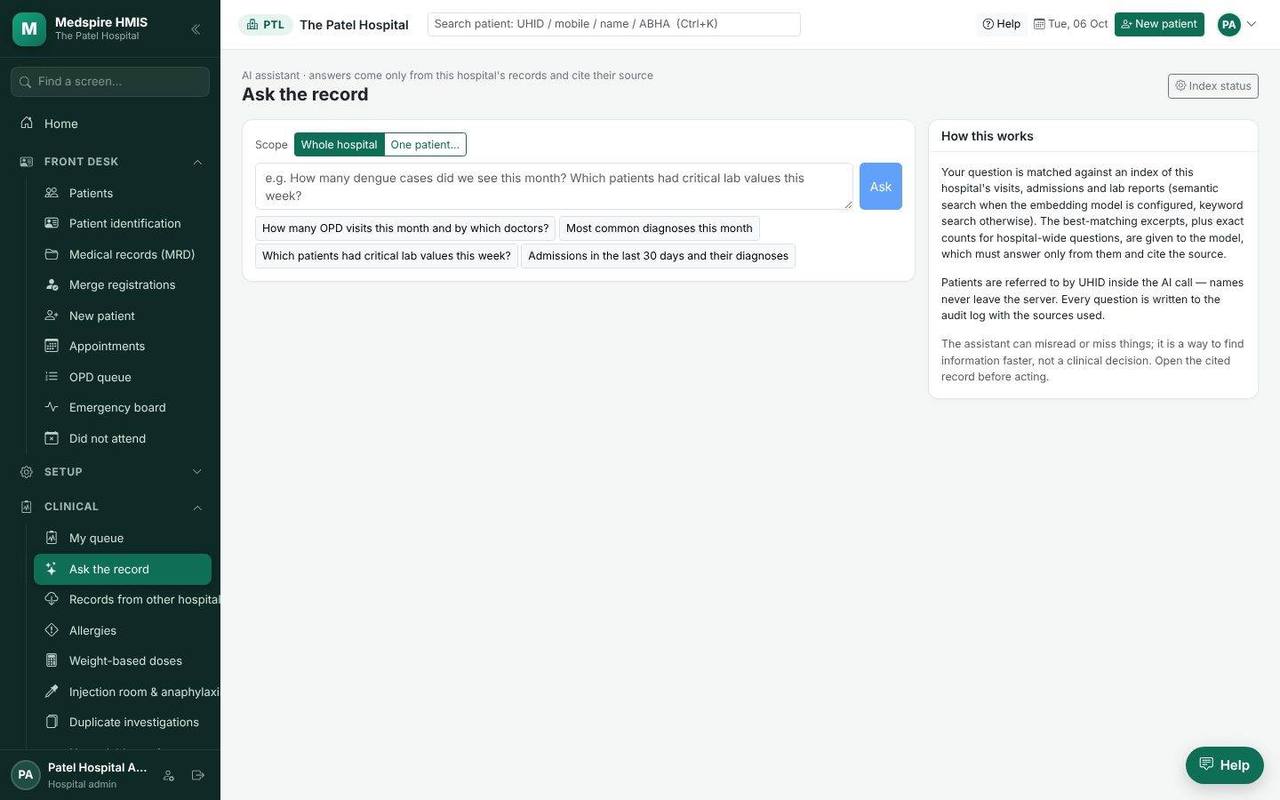
Consultation, e-prescription with interaction and dose checks, dictation in Indian languages, vitals, allergies, referrals, tele-consultations, medical certificates, diabetic foot reviews, discharge summaries and the clinical decision support that reads the chart.
In-patient (IPD)
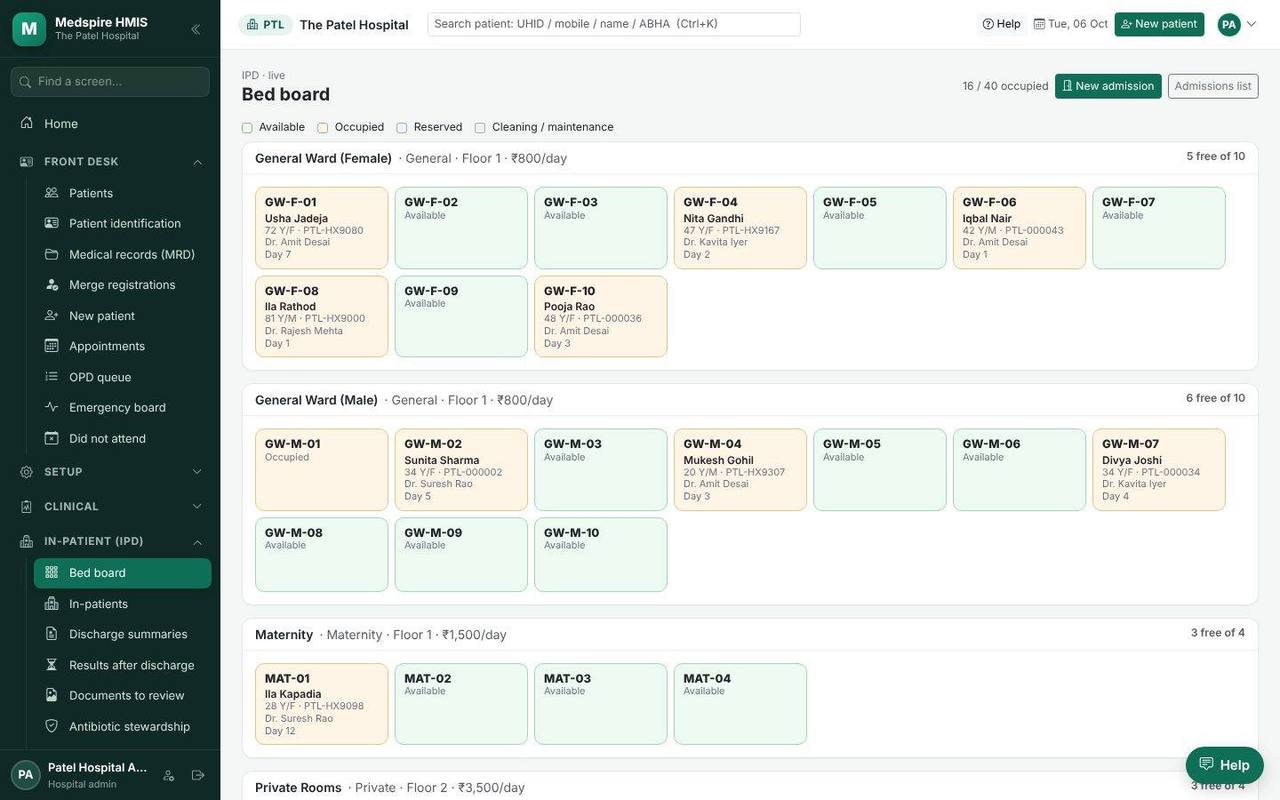
Beds and wards, admissions, rounds, the drug chart, early-warning scores, fluids, oxygen, catheters, restraints, handover, consent, transfers, deterioration, resuscitation status, stroke and heart-attack clocks, patient transport, mental health admissions, organ donation and discharge feedback — the ward as it actually runs.
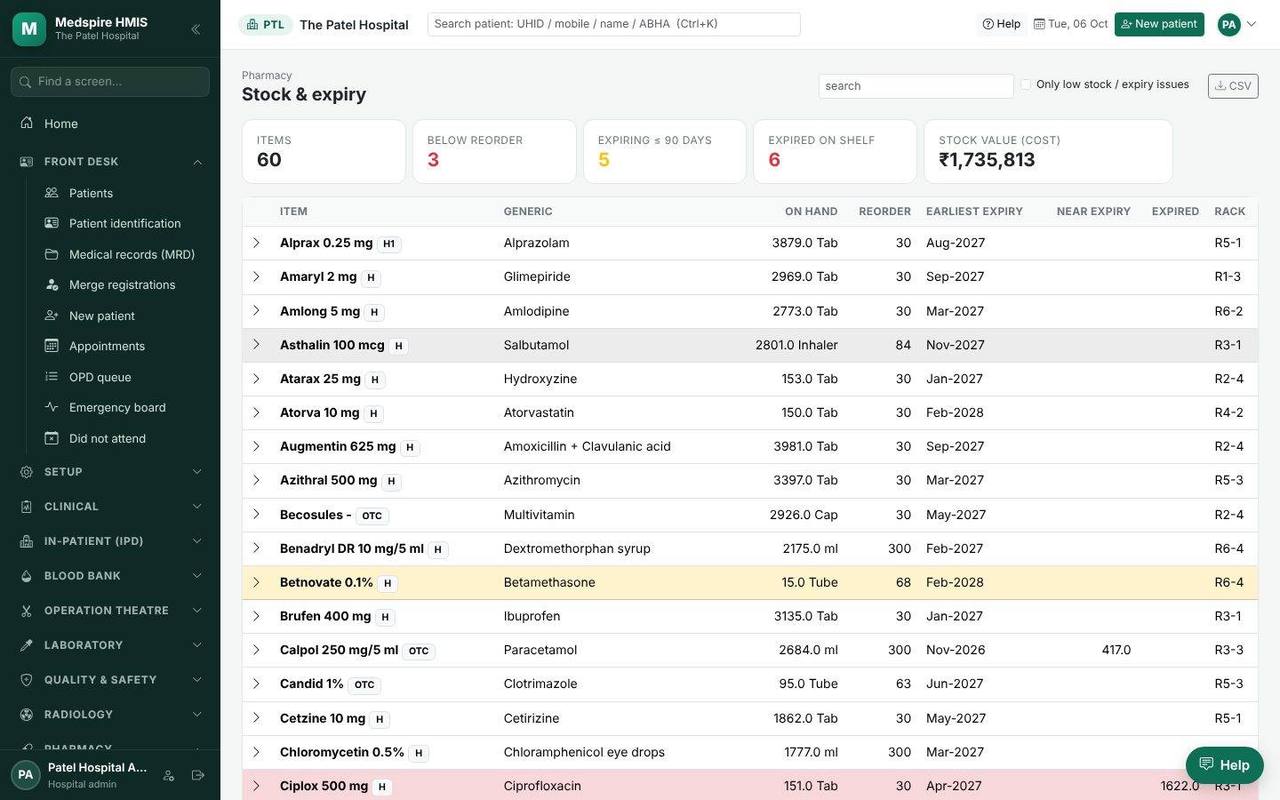
Pharmacy
Batch-wise stock, schedule H and narcotics, dispensing against the prescription, returns, expiry, indents, GST purchase.
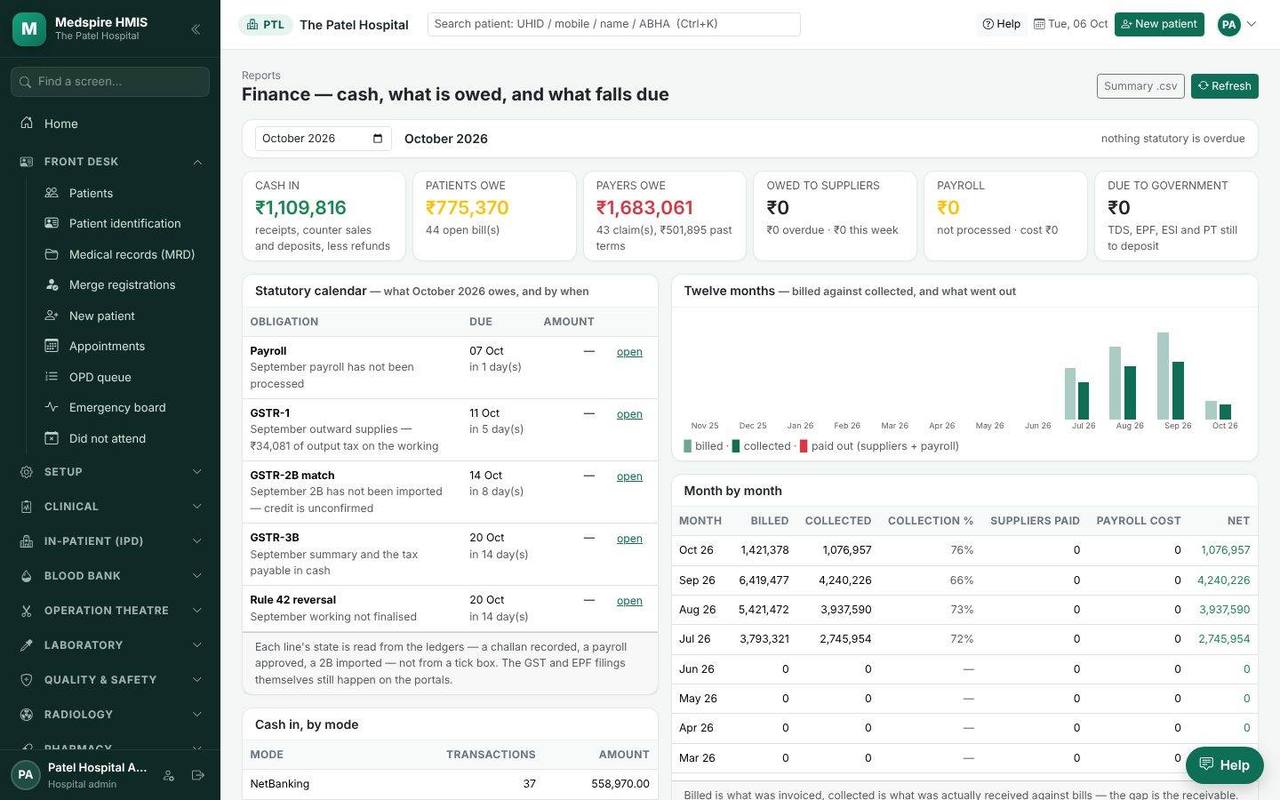
Billing
GST invoices and e-invoice, deposits, packages, discounts with approval, refunds, day-end, cashbook, payables, TDS, GST returns and the finance dashboard.
Your questions
Is Starter enough?
Starter is every module with 25 users — for twenty beds that is everyone. You pay per bed, monthly, and can leave any month.
Do we need a server?
No. Starter runs in our cloud; you need a browser and an internet connection, and the system keeps working for a short outage.
Who sets it up?
You can, in an afternoon, with the help centre's first-week guide; or we do it with you on a video call.